Author: Richin Technology William
Introduction
In the fields of digital twins and engineering simulation, integrating AI technologies has become a key trend for improving both “efficiency” and “accuracy.”
Altair PhysicsAI sees a major update in the 2025 release. With more comprehensive data support and performance optimization, prediction time has been reduced by about 50% compared with previous versions, delivering more accurate and significantly more efficient physics prediction capabilities—and greatly enhancing practical application value.
▶️ Click here to watch the YouTube video introduction
PhysicsAI
Traditional physics-based CAE simulation is accurate, but computationally expensive and dependent on expert modeling; PhysicsAI’s core goal is to shorten compute cycles through AI technologies. However, the legacy GCNS (Graph Convolutional Neural Simulator) approach still has the following pain points: contours are not smooth enough on complex meshes, it is sensitive to changes in mesh size, and it lacks dedicated methods for scalar/vector metrics. In addition, training data access and management previously required external tools, creating a heavier operational burden. These have become key improvement targets in the new release.
Algorithm Breakthroughs
The new release introduces two major new core algorithms to address GCNS limitations and expand prediction capabilities:
- Transformer Neural Simulator (TNS): Compared with GCNS, TNS can produce smoother contours and is less sensitive to mesh size variations.
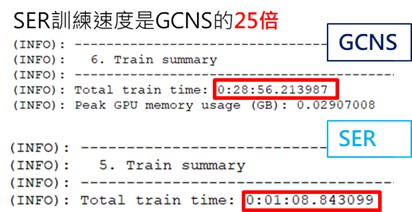
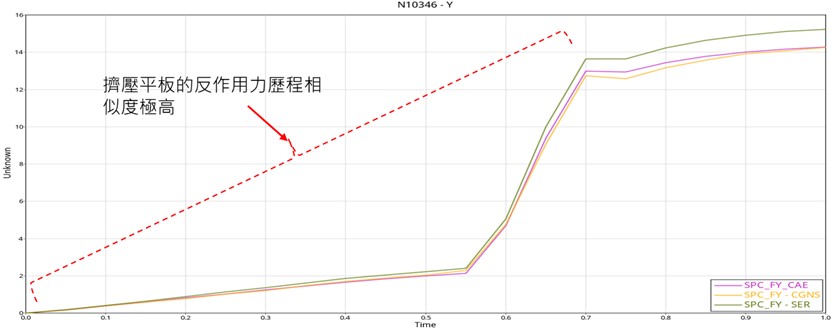
- Shape Encoding Regressor (SER): This algorithm is designed specifically for predicting scalar key performance indicators (KPIs) and vector curves. It does not support contour (field) results, but its training speed is much faster than the GCN-based algorithm.
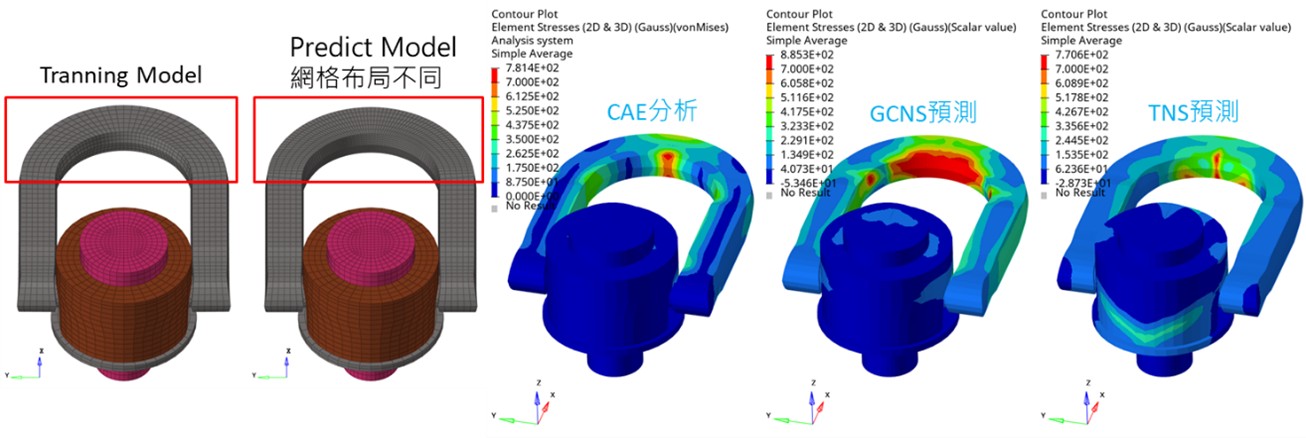
TNS vs. GCNS Mesh Sensitivity Comparison
SER Algorithm Advantages
Data Support and Application Enhancements
The new release strengthens data-processing capabilities, making workflows simpler and more accurate:
- Direct model information reading:PhysicsAI can now directly extract “thickness” and “material ID” from model files (solver decks).
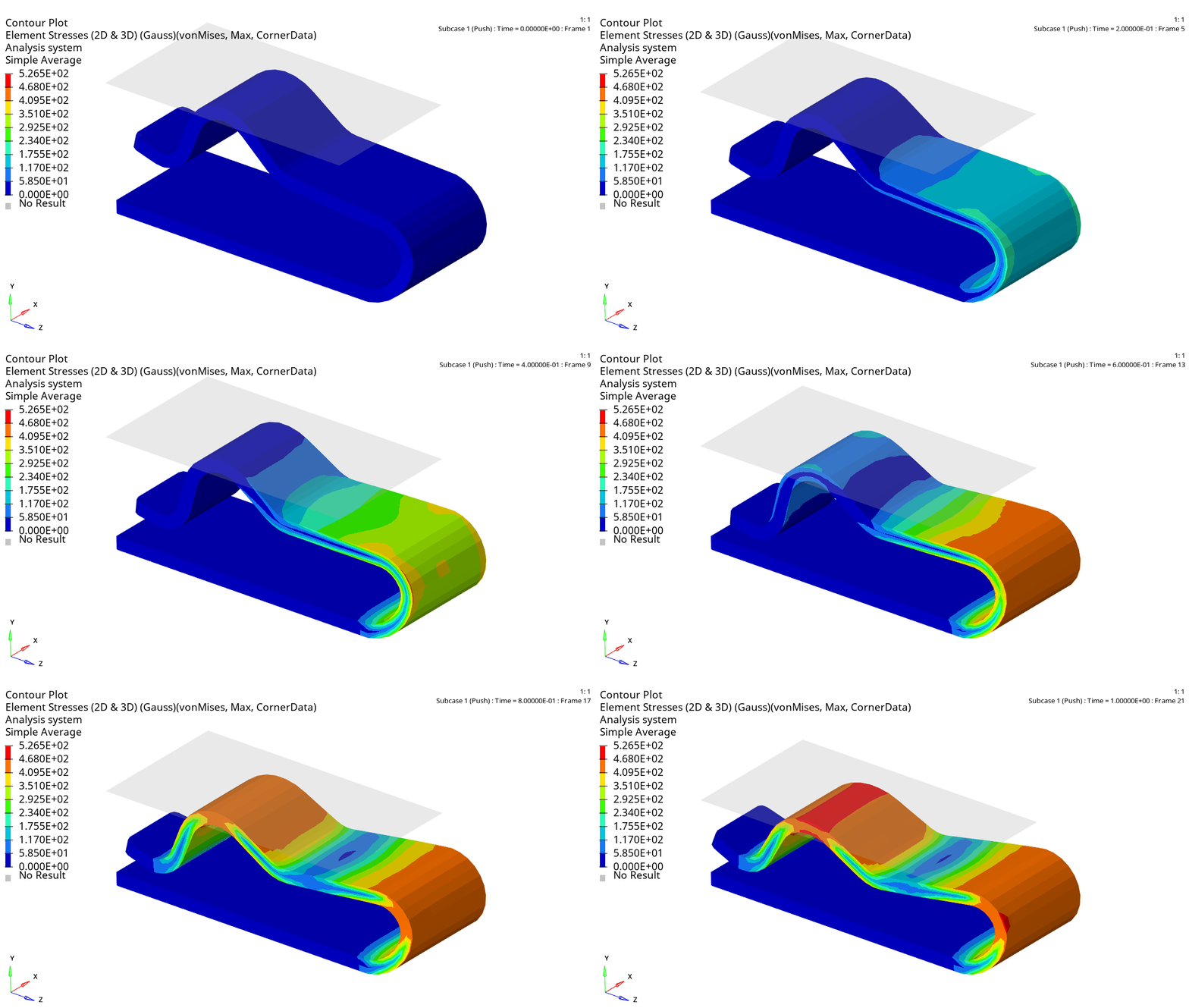
- Corner Data support: When importing results, Physics AI can parse element corner data. This allows predicted result files to be opened with Corner Data enabled to view nodal-extrapolated contours and values. For stress-dominated problems, considering Corner Data yields more accurate predictions.
- User-defined validation dataset ratio: The new version allows users to “customize the proportion of the validation dataset.”
- Curve similarity score: The new “Similarity Score” feature quantifies the similarity between the “predicted curve” and the “target curve” (ground-truth data). This helps users evaluate the accuracy and reliability of model predictions.
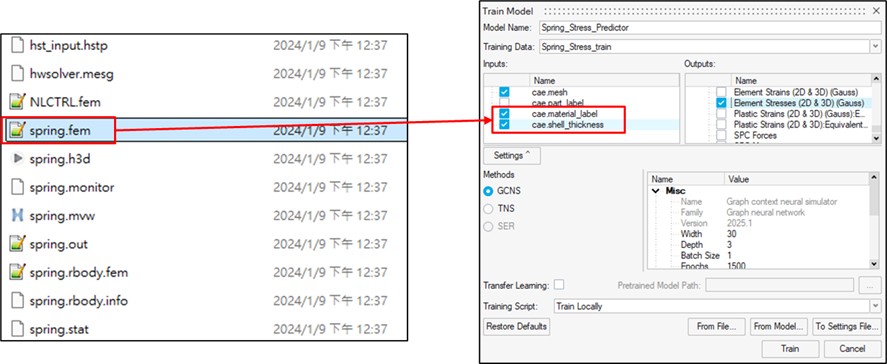
Simplified Method for Reading Model Information
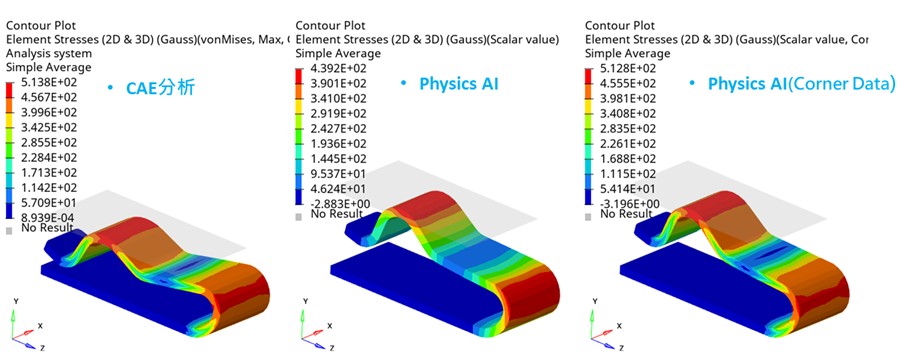
Corner Data Display Support
Functionality and Performance Improvements
Beyond the evolution of core algorithms, the new release also improves “functionality” and “overall performance”:
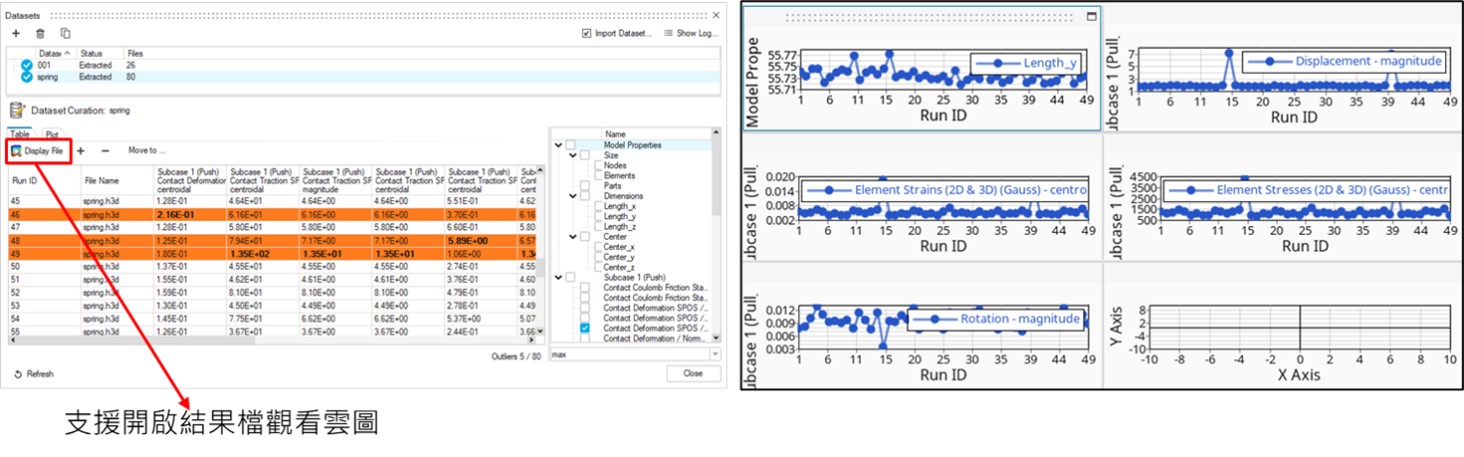
Enhanced data “preparation” features: Data preparation functions for building datasets have been greatly improved, mainly in two categories: “Data Inspection” and “Data Management.”
- Data “inspection” features: Provide more comprehensive tools to ensure data “accuracy” and “consistency.”
- Data “management” features: Strengthen capabilities for data “organization, categorization,” and “version” control.
Prediction efficiency optimization: The newly designed prediction time has been reduced by approximately 50% compared with previous versions. This improvement significantly boosts prediction efficiency, and the acceleration effect becomes even more pronounced for larger models with more mesh elements.
Conclusion
Altair PhysicsAI 2025 focuses on breakthroughs in “algorithms” and “prediction accuracy.” Combined with more complete data support and efficient computing, predictions become more accurate, smoother, and faster. These improvements enhance usability for real engineering problems and are especially beneficial for design workflows that require rapid feedback.
Richin Technology is “an expert in CAE and AI data analytics,” and we have completed many successful case studies.
▶ Contact us now Contact Us to get more information.
▶ Subscribe Richin YouTube Channel to explore more CAE and data analytics.